Research → test → build → iterate
Whether it’s designing an interface or building a team, the same core design principles apply. I try to use this loop to improve many little things in my daily life.
Printful is an on-demand printing and fulfillment company that helps people turn their ideas into brands and products. I spent five years there, joining as a UI/UX Designer at 400 employees and leaving as Lead Designer of the Customer Experience team at 1,500 employees and a $1B valuation.
role
UI / UX Designer → Lead UI / UX Designer
timeframe
2017 – 2022
contribution
User experience, Visual design, User research, Design leadership, Team processes
I joined Printful as their UI/UX Designer in April 2017. When I started, the company had around 400 employees all around the world. Then I experienced the growth to a 1,500-employee team and a $1B valuation. Working in a fast-paced and growth-oriented company like that really taught me how to move fast and make decisions.
The design team grew from 4 designers to around 20 people, including UX researchers, UX writers, front-end devs, PMs and designers. As the team grew, so did my responsibilities, and in early 2021 I stepped up to lead the “Customer experience” part of the team.
Adding management responsibilities provided a completely new spectrum of design. Aligning with other teams, improving output and updating inner processes. All of those were new and exciting challenges that I was eager to face.
Five years, two roles and a team that grew five times over. These are the things that stuck.
Whether it’s designing an interface or building a team, the same core design principles apply. I try to use this loop to improve many little things in my daily life.
Experimenting and keeping momentum are more important than trying to find the perfect solution while standing still.
Especially in a tight team. Make an environment where feedback is safe to exchange and work is shown early — you arrive at the best solution sooner. Something I really embraced when leading.
Whenever you are assigned a task with a specific solution attached, don’t assume that solution is the best one. Ask questions until you get to the bottom of the actual problem.
Join a user interview, read the surveys and — my personal favorite — watch session recordings. Designing a product is one thing; watching how it’s used is another. Often users come up with the best improvements.
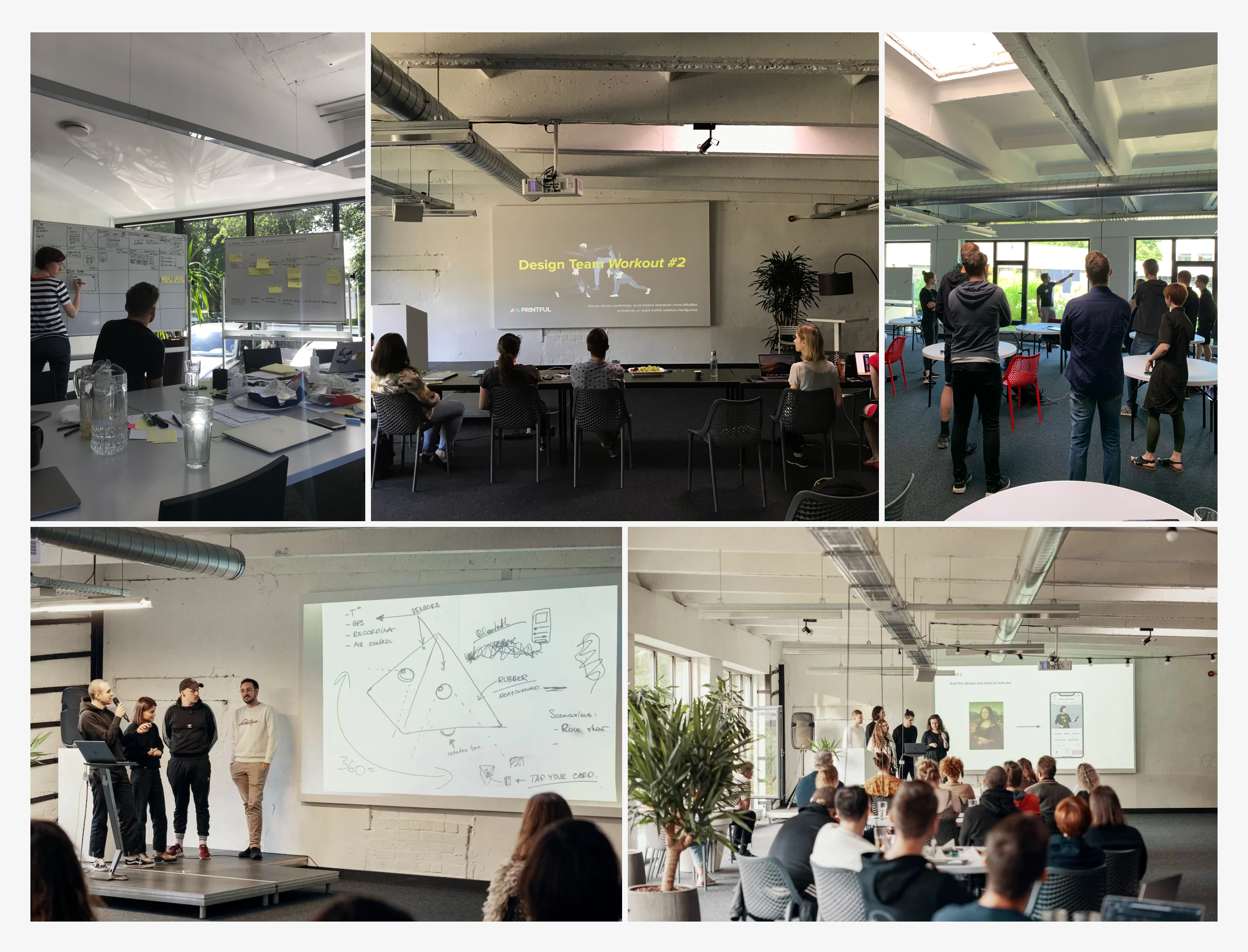
I was responsible for organizing bi-yearly design team hackathons (I called them workouts), where we got together and worked on some challenging ideas without the restrictions of everyday life.
The company also hosted summer boot camps for new developers, where I ran a 2-day workshop on design. Teaching developers about product design and how it overlaps with their work, how to work together with designers — and even made them wireframe their own UIs.
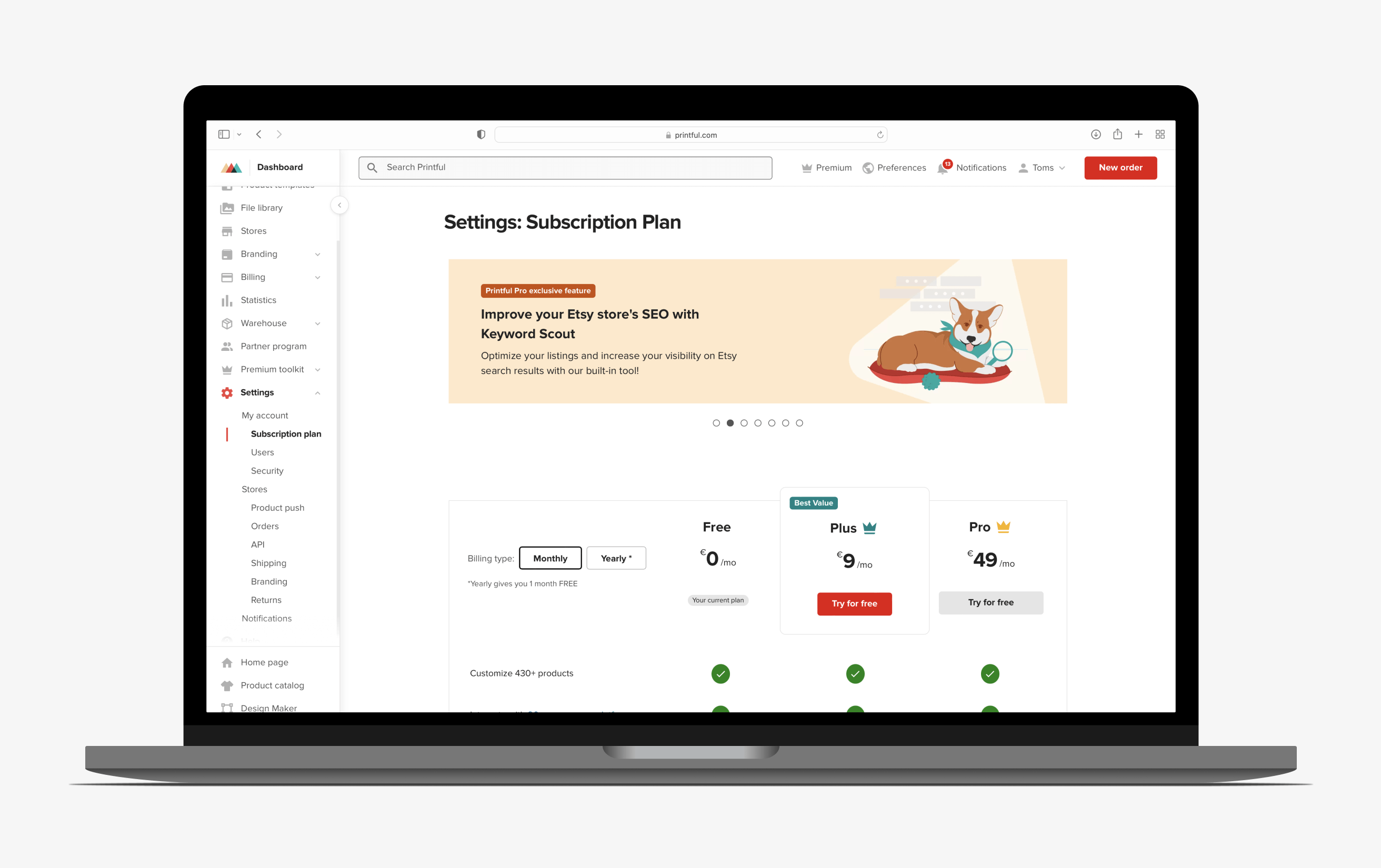
Subscription plans are another sales channel for the company that offers additional features and unlocks premium content for advanced users. This meant that I had to design a completely new subscription flow and also all of the touchpoints where premium content is accessible — products, tools and assets.
I also had to design the user flows for onboarding new and existing users to these plans. The emphasis was on existing users — they have already formed a habit for the product, and substantial changes like this usually produce pushback. We collected data from user interviews to find any possible issues.
After doing that, the rollout was successful — within the first 3 months of introducing the subscription model, the company already had 1,000+ paying customers, resulting in a new income stream.
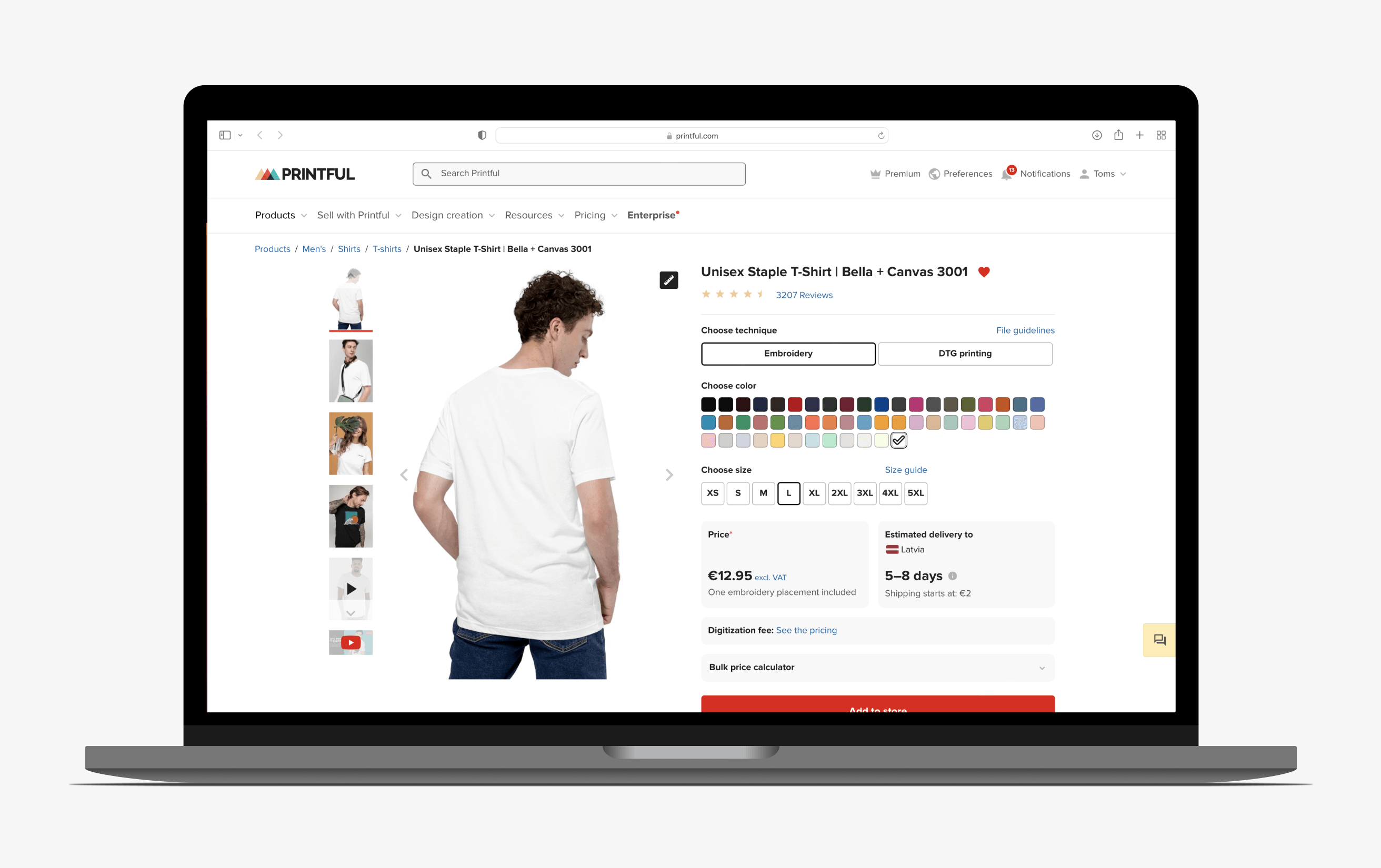
A product catalog is a library of all products that you can customize and sell using Printful. With 1000+ products in the catalog, and the number growing each month, it had to be future-proof.
Product discovery is a priority for users. Product placement is a priority for the company. This means that we needed to have some sort of control over which products we want to emphasize over others — based on stock availability, trends, new products, seasonal changes, etc.
The tools I used for research: Hotjar, to watch session recordings and observe how users go through product selection; user interviews, to show different iterations of prototypes to customers and hear their feedback; and A/B testing, comparing new and old versions in production to see how certain metrics are doing.
Overall the catalog has seen some significant improvements and is now easier to use for customers and more customizable for the company. This specific product page below has seen more than 20 redesigns since the beginning — some are really minor, but each makes it incrementally better.
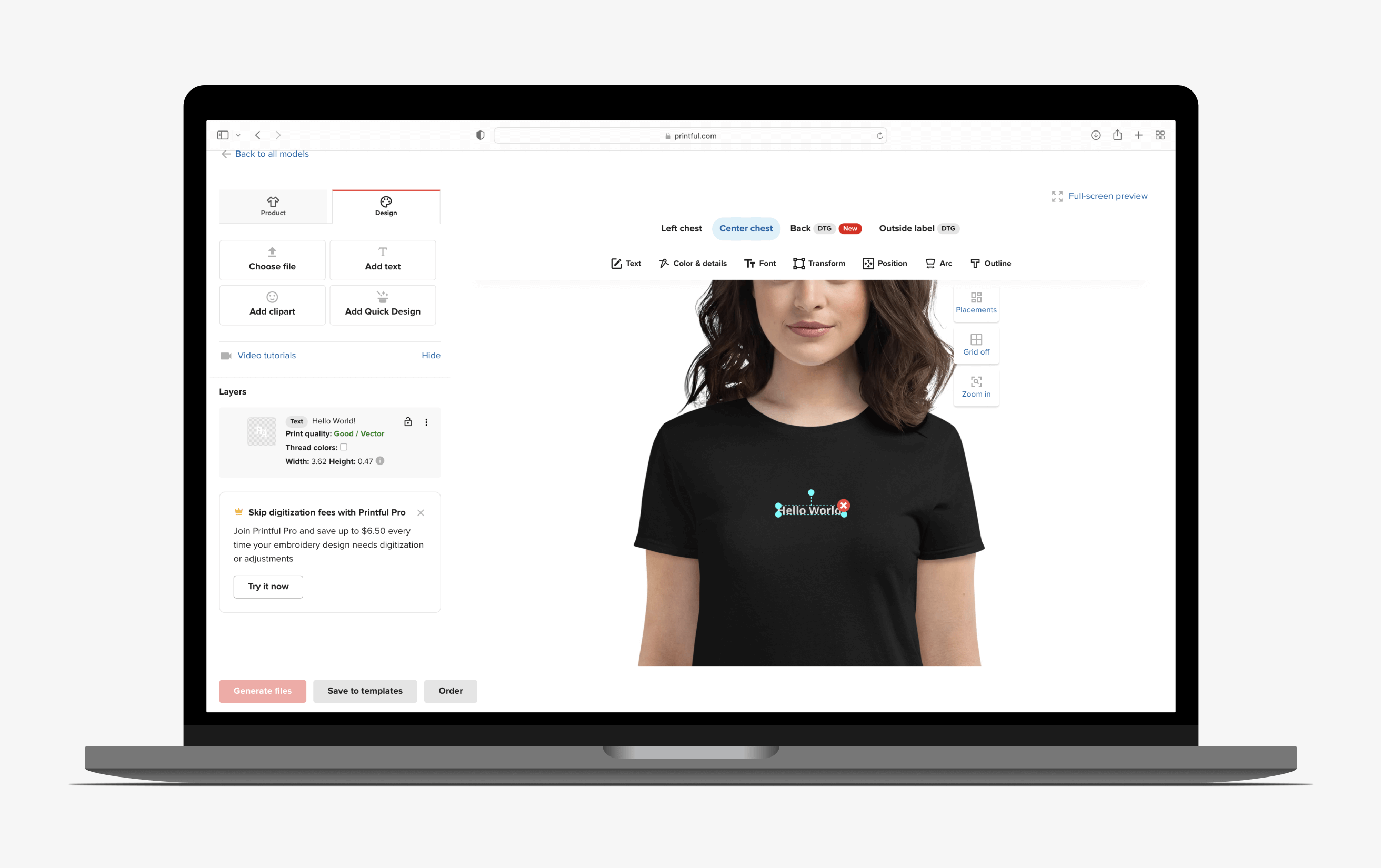
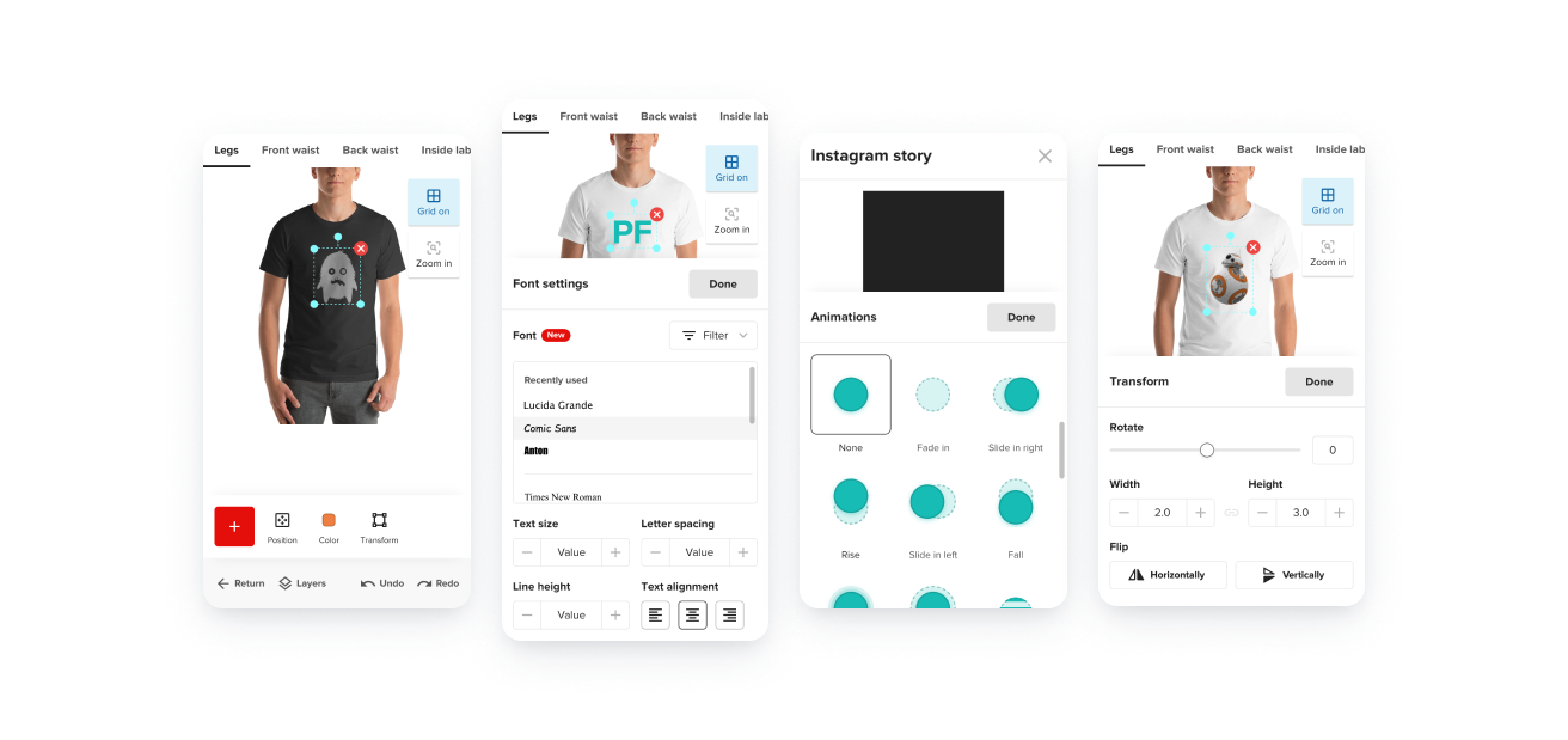
Design Maker is the heart of Printful. This is where customers preview their products, customize and add their designs, generate mockups and push these products to their stores. With 230+ products to account for, Design Maker needs to be incredibly flexible.
Design Maker is the hardest kind of tool to design for: every product has its own specs, and every production technique its own limits. Adding every feature is a fiddly and challenging process. This also means that there are some design compromises to deal with — not every time the most aesthetic solution wins over the most usable one. I prototype, user test and validate each step of the process to make sure that the overall experience is improved.
I was personally responsible for bringing the Design Maker UI to full screen, introducing the new toolbar that supports a growing set of features, and improving the layers UI component.
How does this translate to mobile? That is a good question. Because of the increasing number of mobile visitors we had to think about how to transform all of this advanced functionality into a mobile-first experience. I worked together with the designers on my team to introduce a better mobile experience catered for small screens and touch devices, which resulted in happier customers and less time spent on the design process — meaning users start adding products to their stores faster, increasing the adoption of new products and reducing friction.
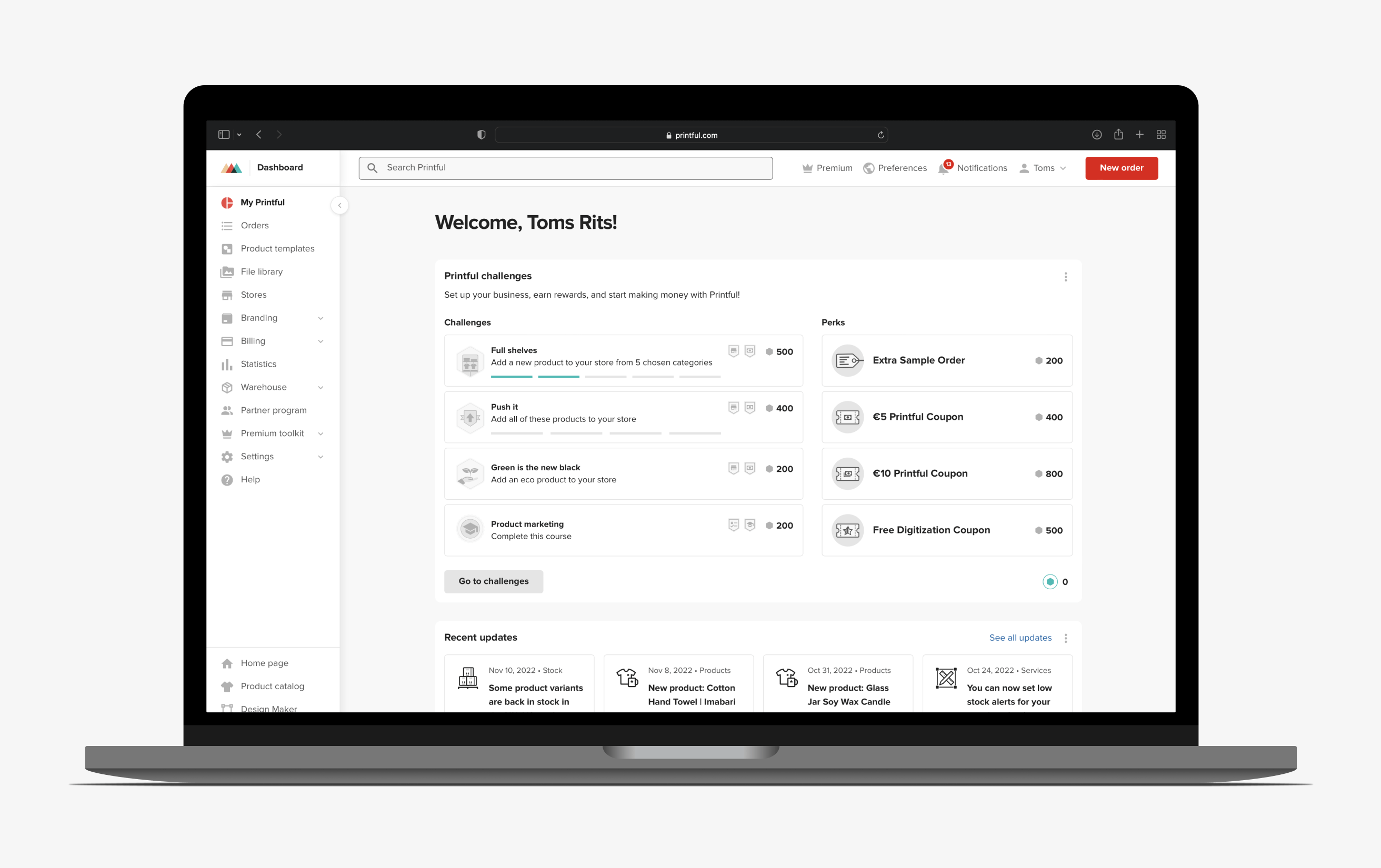
One of my first big projects at Printful was designing the user dashboard. A home to all of a customer’s stats and activities — that is where you can see the overview of sales, new products, updates, challenges and more.
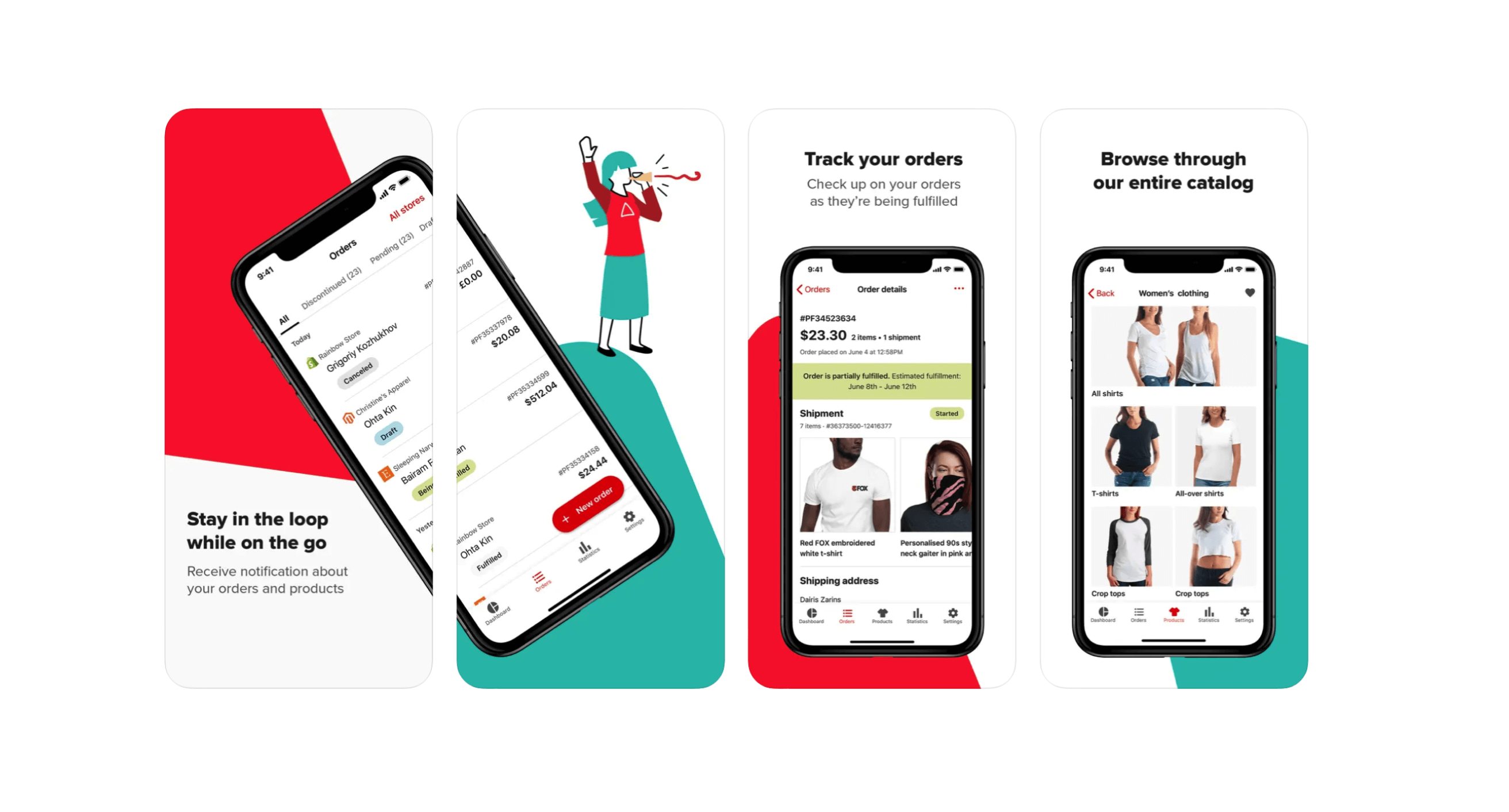
Another big project that I participated in from start to finish was the launch of the mobile app. We knew that lots of customers use their stores to generate secondary income — meaning that they have other responsibilities during the day. When talking to them we also discovered their workflow: while they design and add products mostly using their computer, managing their stores and orders usually happens on the go. Therefore a native app with all the necessary features made a lot of sense. A noticeable benefit for Printful is the added sales channel — native push notifications.
But to earn the trust for this idea, it still needed to deliver a proof of concept, meaning it had to be launched as an MVP to see if it’s a good business decision. The biggest challenge for the launch of the MVP version was researching what features have to be included. What is the absolute minimum that we have to build in order to have the app be useful? This meant a lot of user interviews, asking questions and gathering qualitative information about real-life use cases.
Fast forward to today — the MVP proved itself — now there is a dedicated app team and more and more features are getting added regularly.
Five years, two roles, and a company that went from 400 people to 1,500 and a $1B valuation. I left a better designer than I could have become anywhere else.
“Many eye-opening situations where my pixel-perfect designer dreams collided with the harsh reality of legacy code restrictions, design system limitations, priority changes, canceled projects and stakeholder opinions.”
These are real hardships that not a lot of people often talk about, and they don’t teach them in schools. You just work through them using experience and treat every step as a lesson. I believe that it really formed me into a better designer.